The Future of Moving Money: Less Friction, More Intelligence
11/25/2026 - by Maddi Shuler - Commercial Banking
The way businesses move money has changed dramatically over the past decade. Checks, ACH, cards and wires are still very much part of the payment landscape, but businesses now have access to Same-Day ACH, real-time payment networks such as RTP and FedNow, APIs, embedded banking and emerging forms of tokenized money.
We have more choices than ever. But business behavior hasn't necessarily changed at the same pace. Traditional payment methods still work well enough that many businesses don't have a compelling reason to change the processes they've relied on for years. As Tara Edmonds, SVP and Enterprise Payments Strategy Leader at SouthState, puts it, ”Our infrastructure is changing much faster than business behavior is.”
That disconnect points to a bigger question about where banking goes from here. The next evolution of payments won't simply be about creating more ways to move money or making transactions happen faster. It's about using technology to remove friction, improve visibility and make the complexity of moving money increasingly invisible to the businesses using it.
Speed is probably the easiest benefit of modern payment technology to understand. Businesses want their money to move faster, and real-time payment capabilities can make that possible. But faster settlement only solves one piece of a much bigger problem.
Think about what happens when a payment arrives. Someone may still need to figure out who sent it, which invoice it belongs to, whether there was a deduction and how the transaction should be recorded in the company's accounting system. If those processes are still manual, receiving the money in five seconds doesn't necessarily make the overall payment process five seconds faster.
”The bigger transformation is moving towards an environment that is always reconciled,” Edmonds says.
The goal isn't simply to move money from one account to another more quickly. It's to have the payment and the information that explains that payment travel together in a structured way. That means the receiving business can understand not only that money arrived, but why it arrived and what needs to happen next.
Technologies such as ISO 20022, RTP and FedNow can support richer payment information, but technology alone doesn't create automatic reconciliation. The information has to remain intact throughout the transaction, and a business's ERP, accounting and treasury systems have to be able to use it.
The real opportunity is not just faster payments. It's creating a connected financial workflow in which payment, information and reconciliation work together. That is where payment modernization can begin to create meaningful operational value.
Fraud is understandably one of the concerns businesses consider when evaluating newer payment methods. Instant payments are generally final and irrevocable, so there can be less time to identify and reverse a transaction. But we shouldn't assume that slower payments are automatically safer.
”Faster doesn't inherently mean riskier, and slower does not mean safer,” Edmonds says.
Checks, for example, are one of the oldest and slowest ways to move money, yet they continue to be targeted by fraud. They also require businesses to manage a long list of manual processes, from printing and issuing checks to mailing and reconciling them. That is especially important because some of the biggest payment risks are still human. A fraudster doesn't necessarily have to compromise a payment network. They may simply convince an authorized employee to send a legitimate payment to the wrong account.
Moving to faster payments requires a different approach to risk. Instead of relying on the ability to identify a problem after a payment has been sent, banks and businesses need to put controls in front of the transaction. Authentication, payment entitlements, transaction limits and behavioral monitoring can all help identify potentially fraudulent activity before funds leave an account.
Rather than only considering whether a payment option is fast or slow, payment modernization should be evaluated through the lens of security, cost and operational efficiency. This ensures the payment process is designed appropriately for the business’s needs, risk profile and use case.
The impact of faster settlement goes beyond the individual transaction. It can also change how businesses think about liquidity and working capital.
For years, treasury teams have had to manage uncertainty around when money leaves an account, when it arrives, when it becomes available and whether a payment has actually settled. Those timing gaps can require businesses to manage cash more conservatively than they otherwise might.
Real-time settlement can compress those windows. Businesses are beginning to see the value in that, including through just-in-time B2B payment use cases. But, again, speed alone isn't the ultimate objective.
The bigger opportunity comes when real-time settlement is paired with real-time information and reconciliation. If a business knows what money is coming in, what's going out and exactly what those transactions represent, treasury teams can make much more precise decisions about cash. The conversation shifts from ”How quickly can we move money?” to ”How intelligently can we manage money?”
There are already practical examples of what this can look like. Businesses are exploring instant payment capabilities for payroll, earned wage access and other disbursements. Many companies have built processes to route eligible employee payroll through instant payment networks when the receiving employee's financial institution supports the capability.
One of the biggest opportunities may lie in modernizing outdated processes rather than inventing new use cases. Instead of looking for another reason to use instant payments, businesses can start by identifying where they still depend on checks or other legacy methods and replacing those workflows with faster, more efficient alternatives.
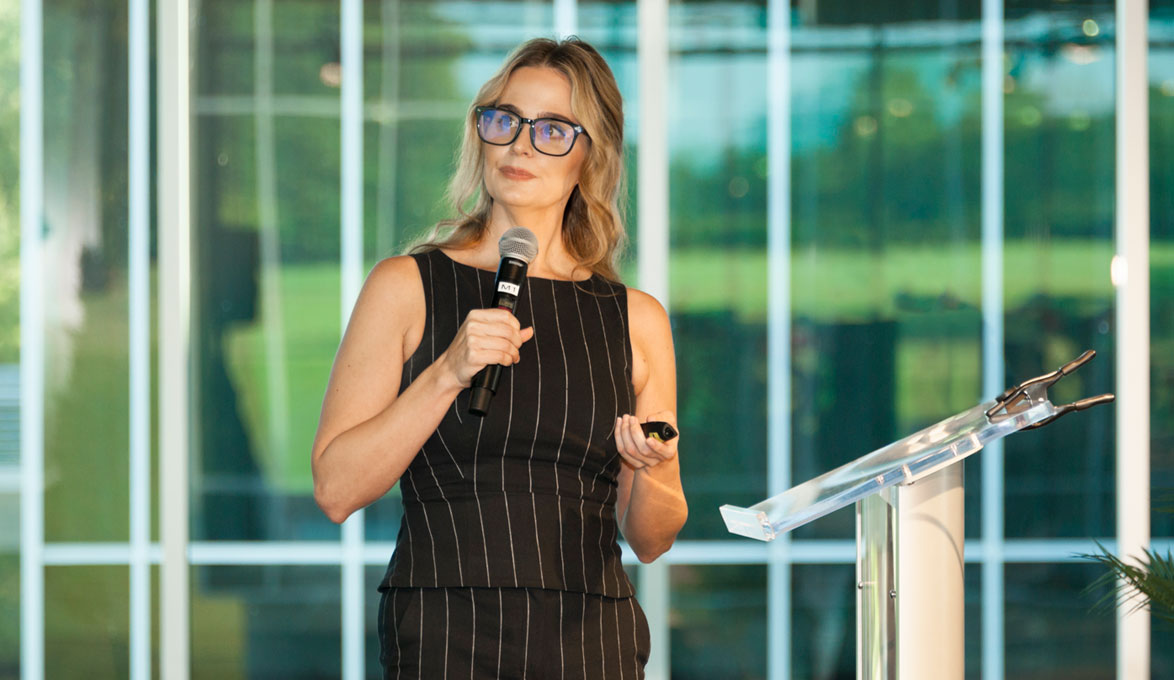
As the payment ecosystem becomes more sophisticated, businesses may actually need to think less about payments—not more. Today, a business may have to decide whether a transaction should be sent by ACH, wire or an instant payment. Each option comes with different considerations around timing, finality, cost and availability. But what if the business didn't have to make that decision?
Edmonds describes a future in which a customer simply communicates what they want to accomplish, and the bank's technology determines the most appropriate way to make it happen. A business might say that a supplier needs to be paid by a certain time, that the funds need to be final, that invoice information needs to accompany the payment and that the most efficient method should be used. The technology would handle the routing, timing and controls behind the scenes.
Consider package shipping as an analogy. When you ship a package, you generally are not concerned whether it travels by truck, airplane or some combination of transportation methods. You care that it gets to the right destination, when you expect it, and securely. Payments should ultimately work the same way.
”We primarily want to know that the money made it where we intended it to go,” Edmonds says.
That's a fundamental shift in the customer experience and means the bank's role becomes less about asking customers to understand the mechanics of payment rails and more about orchestrating those rails on their behalf. APIs, embedded payments, intelligent routing and deeper integration with ERP and accounting systems will help make that possible. Tokenization and other emerging forms of money could add another layer of capability as the industry continues to evolve.
Technology may be driving this transformation, but technology shouldn't be where the conversation starts. For businesses, the most valuable payment strategy begins with understanding how money moves through the organization today:
Those questions can reveal where modernization will have the greatest impact and the technology should follow the business need.
That creates an increasingly important role for bankers and treasury management professionals. Their value isn't simply knowing which payment products are available. It's understanding a customer's business well enough to identify where a different approach can improve efficiency, liquidity, risk management or the overall customer experience. In the near term, that may mean helping a business determine the right payment method for a specific use case. Over time, the goal is to make that decision increasingly invisible.
Five years from now, Edmonds expects businesses to think much less about individual payment rails. Instead, they'll communicate their intent, while technology determines the best way to execute the transaction. That future will likely bring more API connectivity, greater integration between payment capabilities and accounting systems, more intelligent routing and continued development of tokenized forms of money.
For banks, reaching that future will require significant investment in the infrastructure behind the customer experience. But technology is only part of the equation. The greater challenge—and opportunity—is helping businesses understand how these capabilities can improve the way they operate.
”The goal for any business is never to adopt every new payment rail,” Edmonds says. ”It's to remove friction from how the business moves, manages, and reconciles their money.”
That, ultimately, is the real promise of the future of banking: not simply moving money faster, but making the entire experience of moving, managing and reconciling money smarter, simpler and increasingly invisible.
SouthState will be closed Thursday, November 26, in observance of Thanksgiving. Transactions initiated or scheduled on a holiday are processed the next business day. Learn more.